



Technical Resources for Tanager

  • April 15, 2026
  • 11 replies
  • 589 views

carly.beneke
Planeteer 🌎
Forum|alt.badge.img+2

Hi everyone and welcome to the Competition! There are some great questions already, so we wanted to share some additional technical resources to help folks get familiar with Tanager.


We will also be sharing some technical walkthroughs to help folks get started over the coming weeks. Keep the conversations coming!


11 replies

Emil Cherrington
Forum|alt.badge.img+2

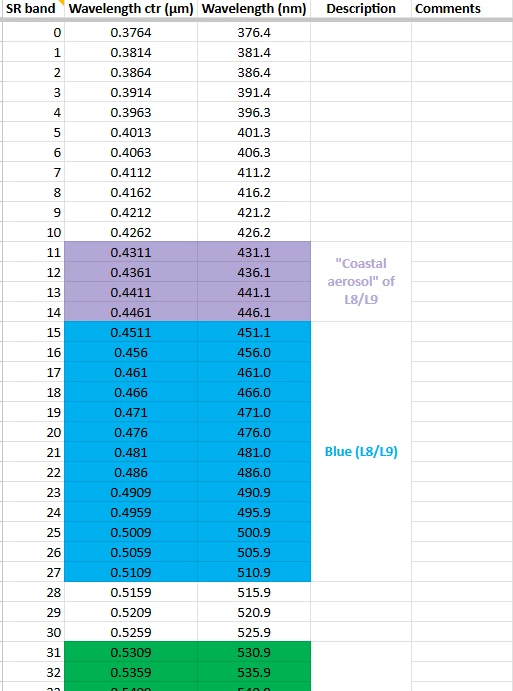
Adding the Tanager spectral bands (and other bands) as a spreadsheet that also provides some comparison w/ the Landsat-8 / -9 Operational Land Imager broadbands [in the first tab], and [in the second tab] lists all 866 bands of the surface reflectance HDF5 product Planet is providing: https://bit.ly/tanager_bands.


elyhienrich
Community Manager 🌎
Forum|alt.badge.img+17
  • Community Manager 🌎
  • April 17, 2026

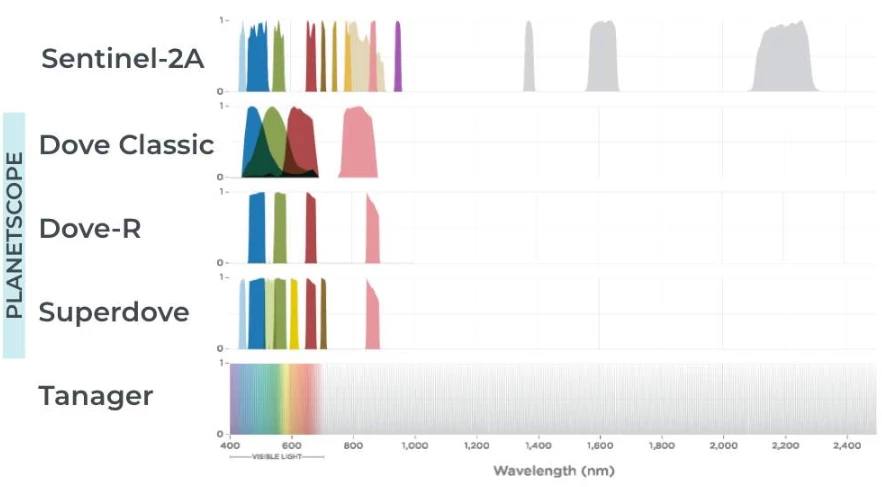
Hi ​@Emil Cherrington, just wanted to share with you that there is also a graph that showcases the different wavelengths between Sentinel 2A, and other Planet satellites in theTanager Overview section of the Introduction to Tanager course.


Emil Cherrington
Forum|alt.badge.img+2

@elyhienrich - This is really useful! The “Intro to Tanager” should be required reading for this competition! Thank you.


Emil Cherrington
Forum|alt.badge.img+2


Hi folks, I’ve made a short walk-through for using ESA’s SNAP software (free) for deriving Tanager GeoTIFFs from the original HDF data: https://github.com/BzGEO/Hyperspectral_Toolkit/blob/main/misc/planet_tanager__geotif_generation_2026-05-01.pdf. One caveat is that I’ve only been successful using the basic_sr_hdf5 data (and not the ortho_sr_hdf5 product). I hope that folks find it useful.


Emil Cherrington
Forum|alt.badge.img+2

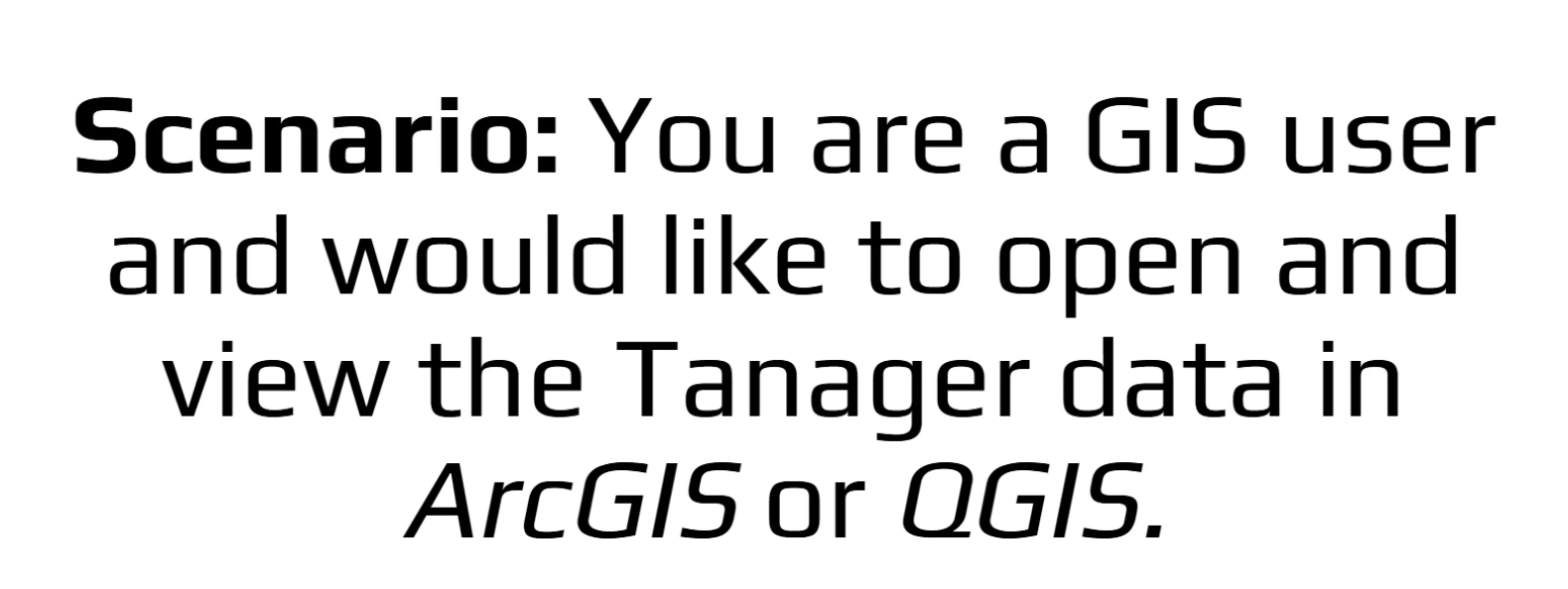
@carly.beneke, ​@amy.rosenthal - In response to slides I posted above, if you and team have other suggestions / resources on how to import Tanager data in ArcGIS or QGIS, I’d certainly be interested to hear. Thank you!


carly.beneke
Planeteer 🌎
Forum|alt.badge.img+2
  • Author
  • Planeteer 🌎
  • May 7, 2026

@Emil Cherrington amazing, thank you for sharing this great resource! We are in the process of packaging a new batch of educational materials to be published in the next few weeks - the focus will be mainly on data I/O, visualization, and basic data exploration, with open source packages, course modules, and video demos to get folks up and running. We will promote more broadly and share more on here soon! 


Emil Cherrington
Forum|alt.badge.img+2

Thank you! I’m interested in seeing said resources, especially if there’s a simpler + better way to view the data, particularly the ortho_sr_hdf5, which I can’t seem to properly process w/ SNAP.


elyhienrich
Community Manager 🌎
Forum|alt.badge.img+17
  • Community Manager 🌎
  • May 11, 2026

Hi! Just sharing that I added Data Quality Reports for Tanager Constellation to the resources listed above! 


Emil Cherrington
Forum|alt.badge.img+2

Thank you so much, ​@elyhienrich! I’ll look at this.


Tiago Rodrigues

Hello Planet community,

I want to say a big thank you to @elyhienrich, @Emil Cherrington, and @carly.beneke for your valuable contributions.

I’m at the beginning of my journey with Earth observation and satellite imagery, and I already feel lucky to be part of a community like this. Every day I’m learning more about measurement and analysis — it’s challenging, but I truly enjoy it.

If anyone with more experience is open to chatting, I’d love to learn from you — and I’m also happy to share my own perspectives as I grow.

Grateful to be here and excited to learn together

Wishing you all the best,

Tiago Rodrigues
[removed by moderator]

https://www.linkedin.com/in/tiagorodriguesde


Emil Cherrington
Forum|alt.badge.img+2

Thank you for participating, ​@TiagoCC! I would highly recommend the Planet University resources shared here by ​@elyhienrich and other Planeteers! For other Earth observation resources, I’d also recommend you check out NASA’s Applied Remote Sensing and Training Program (ARSET): https://www.earthdata.nasa.gov/data/projects/arset. ARSET also has a recorded webinar on working with the PACE hyperspectral mission, whose data is coarser resolution than Planet’s Tanager, but nonetheless complementary to it: https://www.earthdata.nasa.gov/learn/trainings/introduction-plankton-aerosol-cloud-ocean-ecosystem-pace-hyperspectral-observations.